Send a Moaning Voice Message

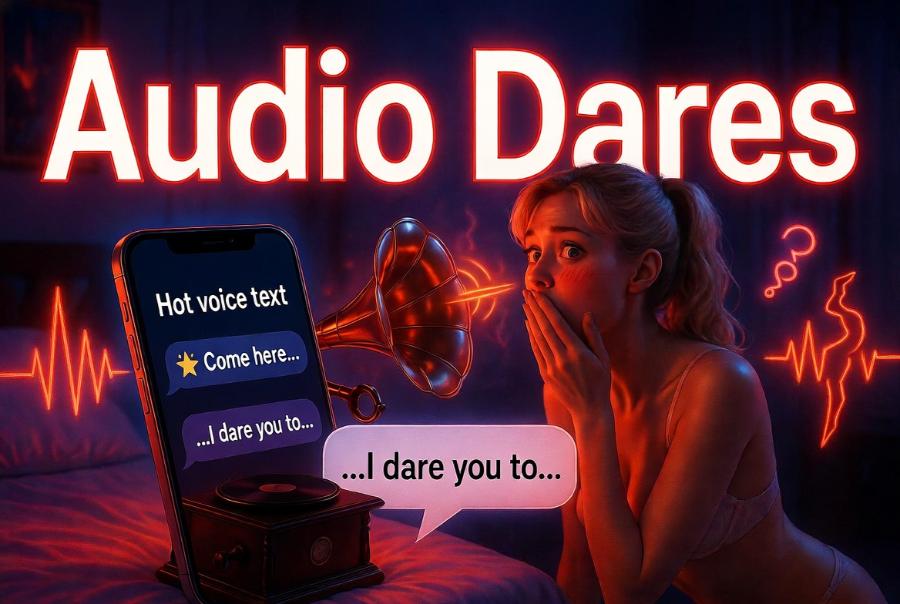
Who doesn't like Hot Voicemails?
This dare tasks the dared person with calling someone they have tension with, letting the call roll to voicemail, and then filling the recording with an extended performance of moans, gasps, and breathy vocalizations that suggest they are in the middle of something intense. The group watches in silence as the player closes their eyes and commits to the audio, building from soft whimpers to more urgent sounds, letting moments of silence stretch between vocalizations to create the illusion of real activity. Because it is a voicemail, there is no chance for the recipient to interrupt or question what they are hearing; they simply receive this unfiltered audio artifact later, pressed against their ear, with no context and no way to immediately respond. The player must fill the full time limit of the message, usually sixty seconds, creating a miniature symphony of simulated pleasure that the recipient will replay multiple times trying to understand. When that person calls back, confused and possibly aroused, the group gets to witness the return call together and decide whether to maintain the mystery or reveal the game. The lingering nature of a voicemail, the fact that it sits on their phone waiting to be discovered, makes this dare feel more permanent than a live call ever could.

The Tame version
There is something uniquely nerve-wracking about pressing that little microphone button and actually hearing your own voice go out into the world. No hiding behind a text, no emoji to soften the blow — just your raw, unfiltered voice landing in someone's inbox. That is exactly what makes dares involving voice messages one of the most thrilling additions you can throw into any Truth or Dare session.
Whether you are daring someone to confess a crush in their own voice or making them do their best dramatic movie trailer impression for a random contact, voice message dares hit different. The stakes feel real. The reactions are priceless. And the recordings? Those live on forever.
What Makes Voice Message Dares So Exciting
The magic of a voice message dare is the permanence. A spoken word in person disappears into the air, but a voice message sits right there in someone's chat — playable, shareable, and impossible to deny. That little extra weight is what makes the dare feel genuinely thrilling rather than just awkward.
There is also the vulnerability factor. Most people are not used to hearing themselves talk in a recording, let alone sending that recording to someone else on purpose. When a dare forces you to do exactly that, it creates a rush that is hard to replicate with any other kind of challenge. Your heart actually pounds. Your voice might actually shake. That is the good stuff.
And the best part? The recipient of the voice message gets pulled into the dare too — often completely without warning. Their reaction, their reply, the screenshot of their response — all of it becomes part of the entertainment.
How to Set Up and Execute a Voice Message Dare
Setting up a great voice message dare takes about thirty seconds of prep and a willingness to commit. Here is how to make it land perfectly every time.
First, choose the target contact wisely. The dare works best when the recipient is someone the player actually knows — a close friend, a family member, a coworker, or an old classmate. The relationship adds stakes. A stranger gets a weird voice message; a friend gets a moment they will never let you forget.
Next, write out or agree on the exact content of the voice message before recording. This keeps things fair and prevents the dared player from wriggling out with a half-hearted mumble. Decide in advance: is it a confession, a song, a fake announcement, a dramatic reading? Lock it in. Then hit record with the whole group listening.
Make the player send it immediately — no do-overs, no listening back first. That is the dare. The spontaneity and the irreversibility are the entire point. Once it is sent, the group waits together for the reply, which is almost always its own entertainment.
Tips for Pulling It Off Confidently
The number one thing that tanks a voice message dare is the player rushing through it in a barely audible, anxiety-soaked whisper. Encourage full commitment. Speak clearly, use the voice, own the message. The more confident the delivery, the funnier and more impactful the result.
Remind the player that hesitation sounds worse than confidence every single time. A bold, clear voice message — even a wildly embarrassing one — lands so much better than a mumbled, trailing-off attempt. Channel the energy of someone who absolutely means every word.
If nerves are making it hard to start, try a countdown. Three, two, one — record. The countdown cuts off the overthinking spiral and forces the player to just go. It works almost every time and adds a little dramatic flair for the group watching.
Finally, encourage players to stay in character until the message is fully sent. No laughing mid-recording, no breaking to explain to the recipient what is happening. The cleaner the message, the bigger the reaction on the other end.
Fun Voice Message Dare Variations to Try
The beauty of dares involving voice messages is how endlessly customizable they are. Here are some crowd-tested variations that work brilliantly across all kinds of groups.
- The Confession: Record a voice message confessing a totally harmless but mildly embarrassing secret to a chosen contact.
- The Movie Trailer Voice: Narrate a dramatic summary of the dared player's week in a full movie trailer voice and send it to their best friend.
- The Fake Announcement: Record a voice message announcing something completely absurd — a fake life update, a fake award, a fake resignation — and send it to a family member.
- The Compliment Overload: Send a voice message to someone giving them five over-the-top, dramatic compliments without breaking.
- The Accent Challenge: Record the voice message entirely in a chosen accent — British, pirate, Southern, you name it — and send it without explanation.
- The Serenade: Sing a short song or jingle to someone in their messages. Bonus points if the song is about them specifically.
Each of these variations lands differently depending on your group, but all of them create that perfect combination of cringe, laughter, and genuine excitement that makes Truth or Dare worth playing.
How to Adjust the Intensity for Your Group
Not every group is ready to send a voice message confession to their crush on the first round. That is completely fine. Voice message dares are easy to scale up or down depending on the vibe of the room and how comfortable everyone is.
For a lighter touch, keep dares within the immediate friend group — message someone who is actually in the room, or send a voice message to a group chat everyone is already part of. Lower stakes, but still funny and slightly nerve-wracking. It is a great warm-up level.
For a medium intensity round, expand the target pool to close friends or family members outside the room. The message is still going somewhere real, to someone who knows the player, which adds a genuine edge without crossing into uncomfortable territory.
For maximum chaos — reserved for groups that are fully committed and fully trust each other — open the contact list a little wider. Old classmates, coworkers, that one acquaintance from a party three years ago. The further the contact is from the player's daily life, the wilder the message can be without real consequence. Just keep it kind, keep it funny, and keep it something everyone will laugh about later.
Frequently Asked Questions
What kinds of voice message dares work best for a big group?
Dares that involve a clear, specific script or task work best in bigger groups because they are easy to judge and fun for everyone to watch. Things like the accent challenge or the movie trailer voice tend to get the loudest reactions because the performance element entertains the whole room while the dare is happening.
What if the person receiving the voice message gets upset or confused?
Keep dares kind and lighthearted, and make sure the message is something you would not mind explaining afterward. If a recipient seems genuinely confused, the player can always follow up with a quick text explaining it was a dare. Most people find it funny once they know the context.
Can voice message dares work over group chats or does it have to be a private message?
Both work great and create different kinds of fun. A private message feels more personal and targeted. A group chat message means more people see the dare play out in real time, which can multiply the chaos and the laughs significantly.
Is it okay to save or share the voice messages after the game?
Always check with everyone involved before saving or sharing recordings beyond the group. Within the game group, replaying the best messages is part of the fun. Sharing them more broadly should only happen with everyone's enthusiastic agreement.
Dares involving voice messages are some of the most electric, laugh-out-loud moments you can create in a Truth or Dare game — and once your group tries them, you will never go back to plain old text dares again. The combination of real stakes, real voices, and real reactions is just unbeatable. So queue up your next game, pick the boldest dare on this list, and press record. Your group chat will never be the same.

Hot Asian Chat!

If you are into hot Asian cam girls
come see me - BB



© 2004-2026 Truth or Dare Pics - Terms - Contact